Happiness Through Creating

The Models

Seven models that describe how creation works, what opposition does to it, and how both shape the people we become.

These are the working diagrams behind the books, the coaching, and the Creator Academy curriculum. Each one is a way of seeing something you already experience.

MODEL ONE

The Creator's Opposition

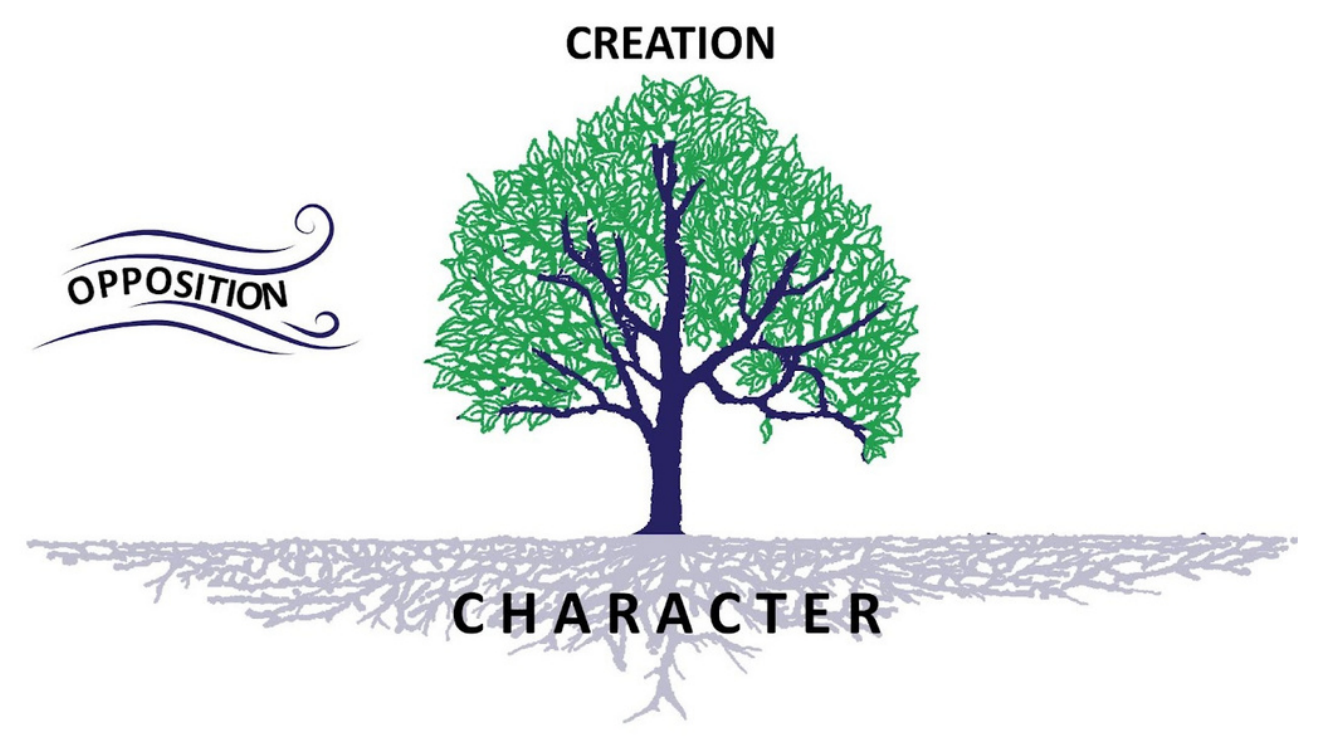
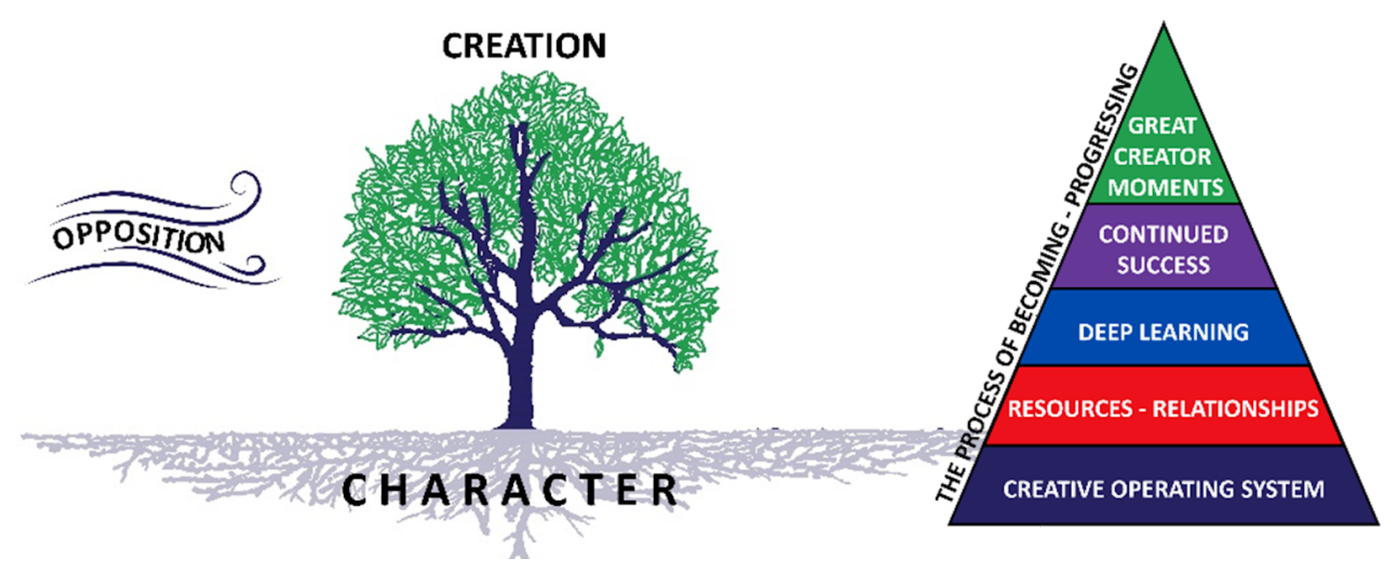
This image helps us see that character is what creates. And that the process of trying to create brings opposition. We all live it. We all experience it. And I have created these models to help us acknowledge and be more effective at living after a manner of happiness by being able to be intentional about our transformation through it.

A tree labelled Creation above ground and Character below, with Opposition as wind against it

MODEL TWO

The Creation Cycle

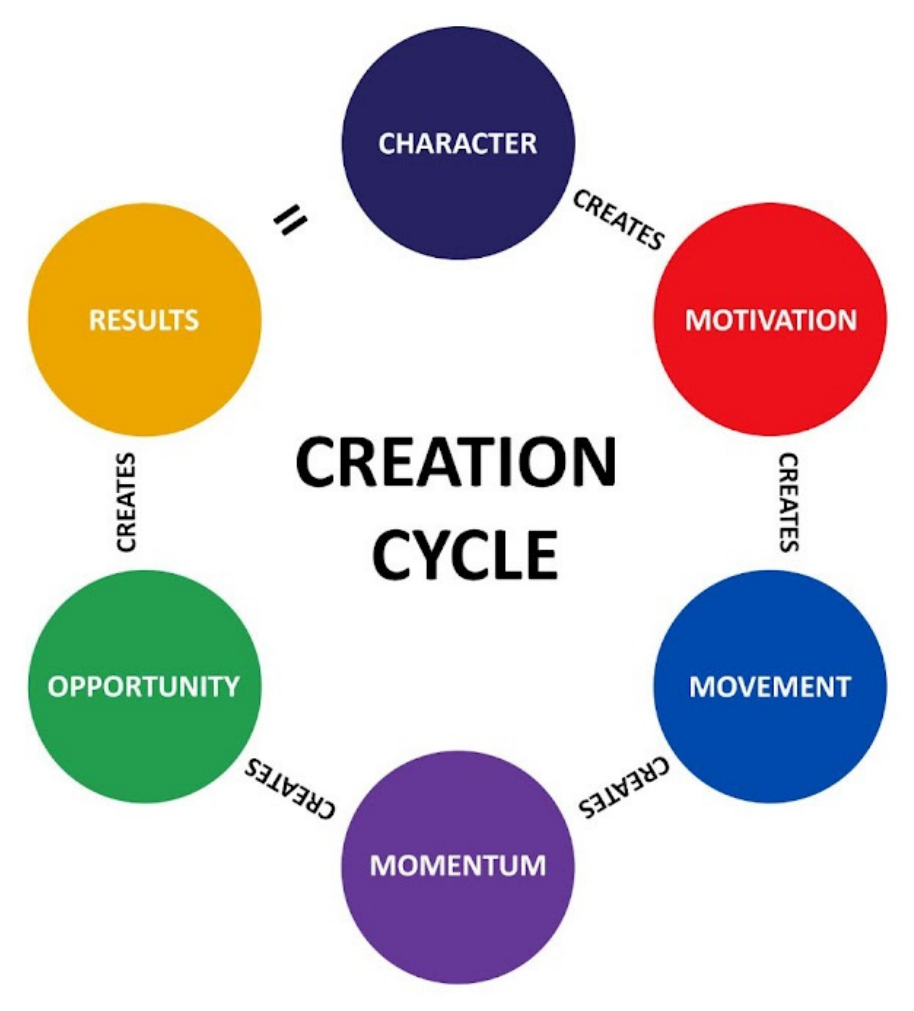
Character creates motivation. Motivation creates movement. Movement creates momentum. Momentum creates opportunity. Opportunity creates results. And then the all-important conversion back into character.

This is a spiral of creation that hinges on our conversion. Are we spiraling upward toward growth, or spiraling out of control? How we feed and develop our character through the conversion of our experiences makes all the difference in what we create. And interestingly, it also reminds us that our greatest creation is our own character.

A circular diagram: character, motivation, movement, momentum, opportunity, results

MODEL THREE

The Creator's Pyramid

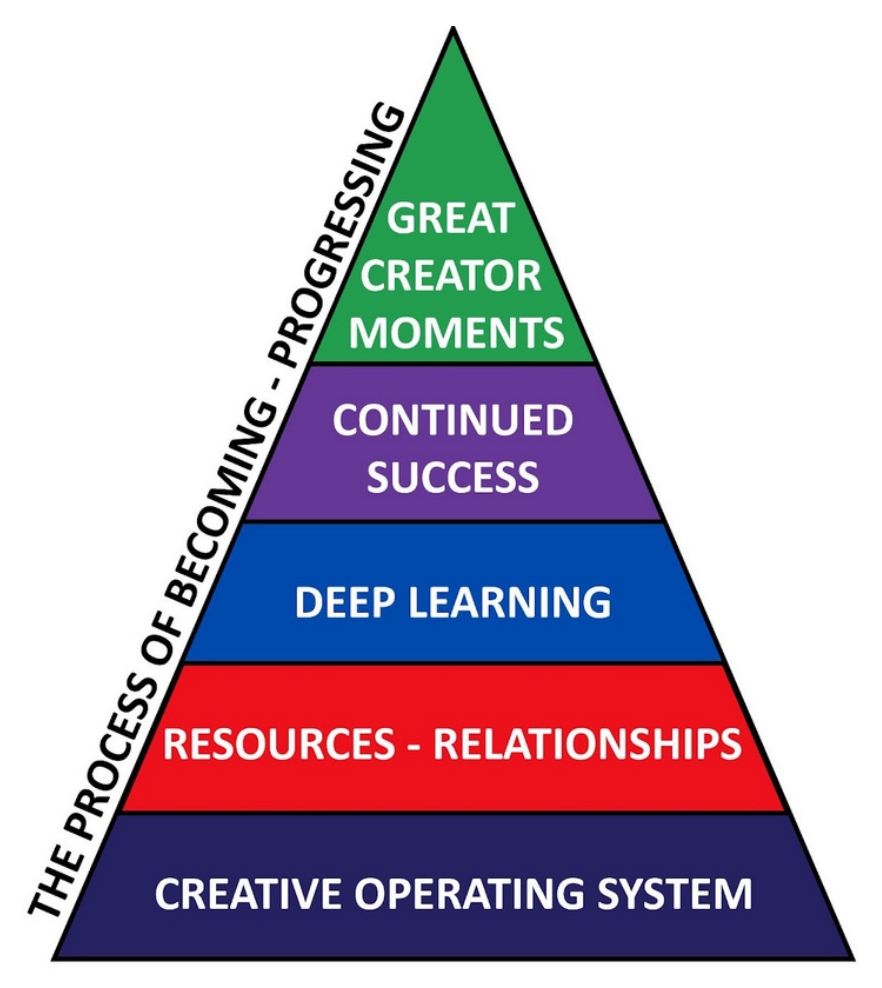
Five levels in the process of becoming and progressing. Your creative operating system sits at the base — the fusion of character and insight looping. As you use your creative operating system you should be connecting to resources, the key resource being relationships.

These interactions and dialogue will deepen your learning, turning experience into capability rather than just history. That will allow you to harvest continued success: attributes, habits, and the many wonderful fruits of a positive and developing character.

And every now and then you get to sit atop the pyramid with that incredible feeling of “I created this,” “I did this,” or however you describe the feeling of having a Great Creator Moment. It is just a moment, but it is everything below it that leads to it. If you aren't having them, use the pyramid to help you diagnose. This isn't a ladder to climb. It's a diagnostic tool to help you experience more joy and happiness in your life.

Five-level pyramid from creative operating system up to great creator moments

MODEL FOUR

The Insight Loop

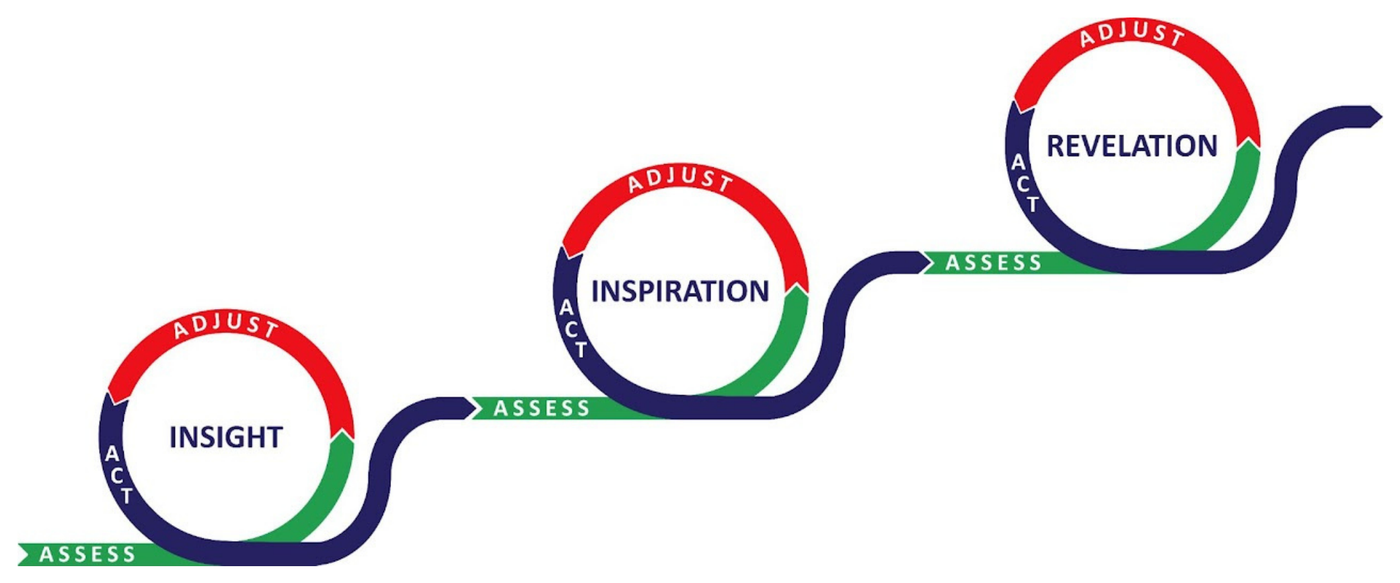
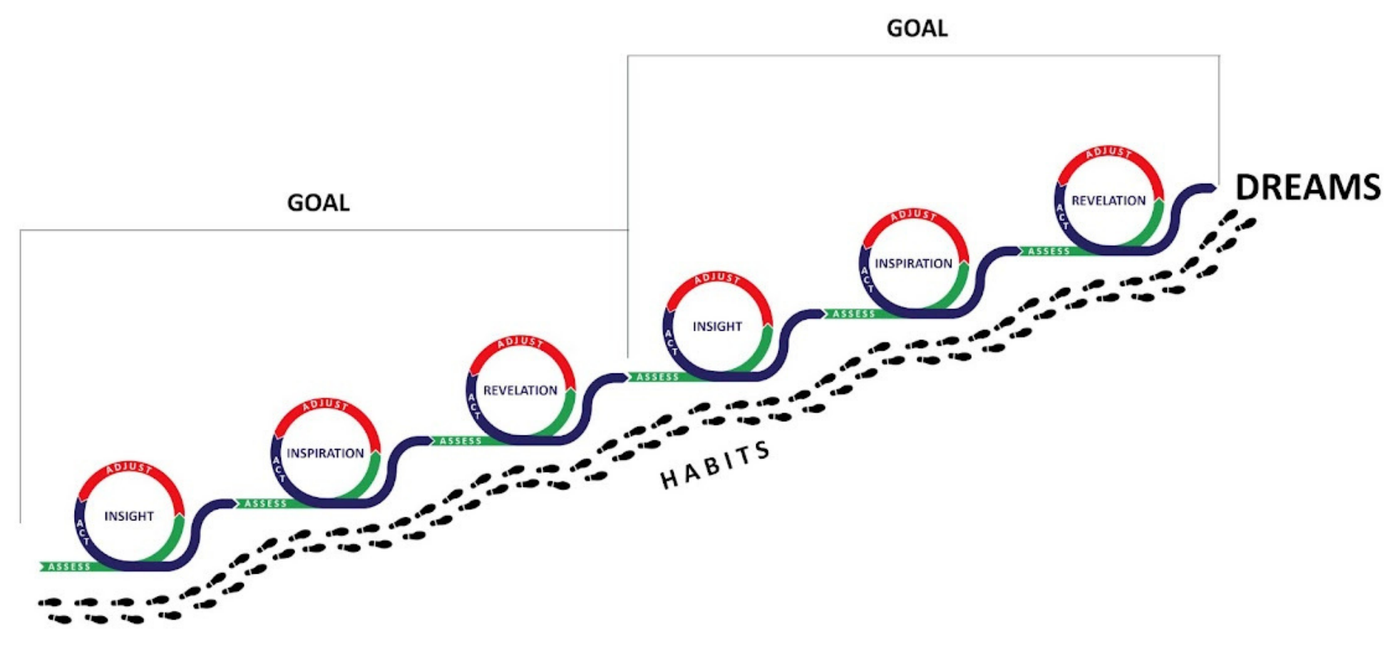
Assess, adjust, and act. You need the whole loop to create the value. In a 3D model you would see a spiral that is helping you learn and grow.

The iteration pattern of these loops helps you deepen your learning from insight, to inspiration, to ultimately revelation.

Three ascending loops labelled insight, inspiration, and revelation

MODEL FIVE

Model Fusion

Different visuals of the same process of growth and becoming. The tree shows what's visible and what holds it up. The pyramid shows the order in which the underground part gets created.

Put together, they explain why development can't be rushed and why the most impressive results usually come from the least visible work.

The tree model and the pyramid model placed side by side

MODEL SIX

Great Creator Moments

Habits, insight looping, goals, all leading to dreams — this is the process of great creator moments. Character starts and is the fruit of a creation cycle, and this model shows what character looks like when chasing our dreams.

We need good habits, effective insight looping, and transformational goals that will all help us live our dreams and experience great creator moments.

Ascending loops crossing goal markers toward dreams, with habits running beneath

MODEL SEVEN

The Relationship Pyramid

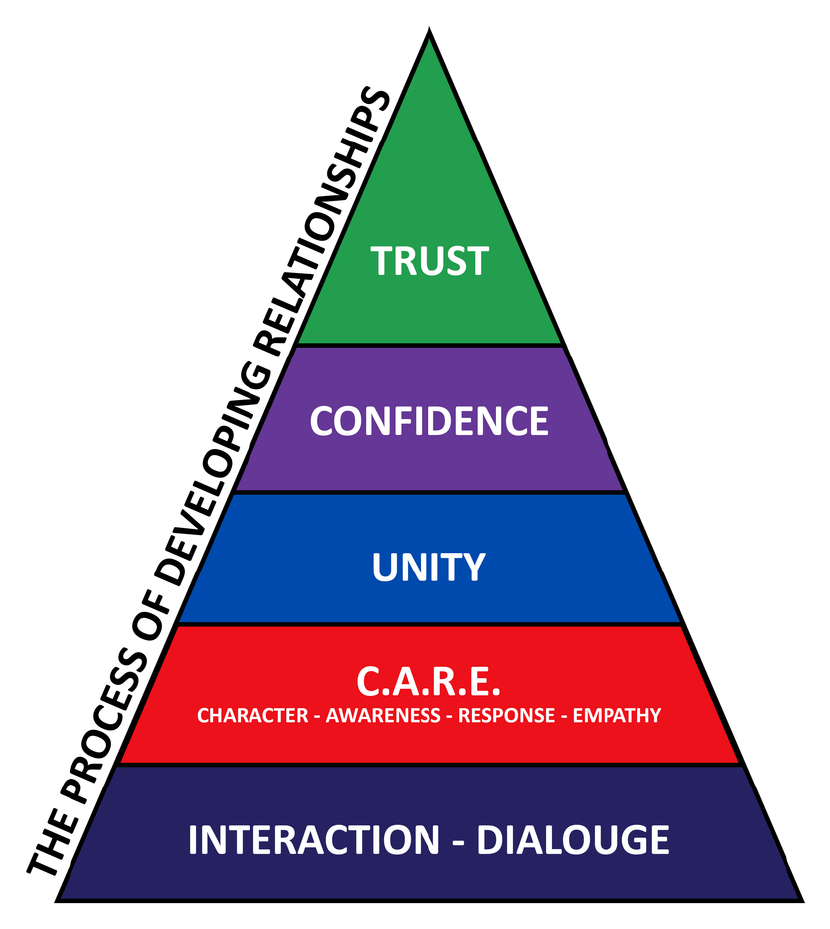
This pyramid is here to help you diagnose any relationship and what you need to work on for the relationship to thrive. Each layer builds on the others and they are all interconnected. One day you might feel that you're at the top and the next, you might need to work on a different area.

It starts with interaction and dialogue. Then C.A.R.E.: character, awareness, response, empathy. From there, unity, then confidence, then trust.

Five-level pyramid from interaction and dialogue up to trust